DISPATCH 001 // HUMAN // RITUAL 8 MIN
A City Walks Its Fears to the Fire
Night Mass may be the engine of Dark Mofo, but the Ogoh-Ogoh is its heart. It is also the reason to come.
The best recommendation I got all festival came from a stranger on the tarmac at Hobart airport. A friendly local uncle, started a conversation admiring my coat while we were walking across the tarmac. He clearly had good taste, so I asked him what his favourite parts of Dark Mofo were. He didn’t mention the program. He said: go to the procession, go to the Nude Swim - and go in head first.
The two events that cost nothing. The two events with no lineup. The two events you cannot experience by watching - only by joining.
When I was last at Dark Mofo in 2023, I came for the first week and missed the Ogoh-Ogoh procession entirely - so this time, my friend and I purposely chose the second week to catch what we’d missed.
“Locals don’t recommend the festival to you. They recommend the parts where the city shows up as itself.”
01 — THE BELLY
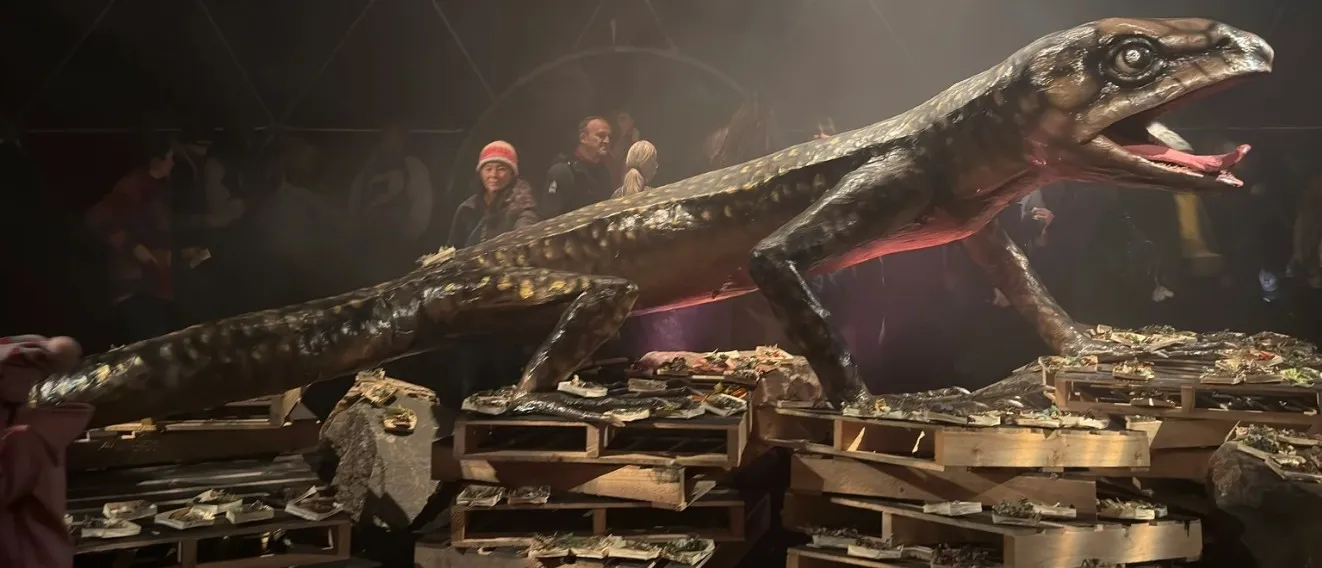
The ritual begins at the start of the festival, in Dark Park, where the Ogoh-Ogoh stands waiting - a vast creature built by Balinese artists, this year a Pedra Branca skink, an endangered lizard found on a single island off Tasmania’s coast. The city burns its fears inside the body of something it is afraid of losing.
The ritual is imported from Bali and it is disarmingly simple:
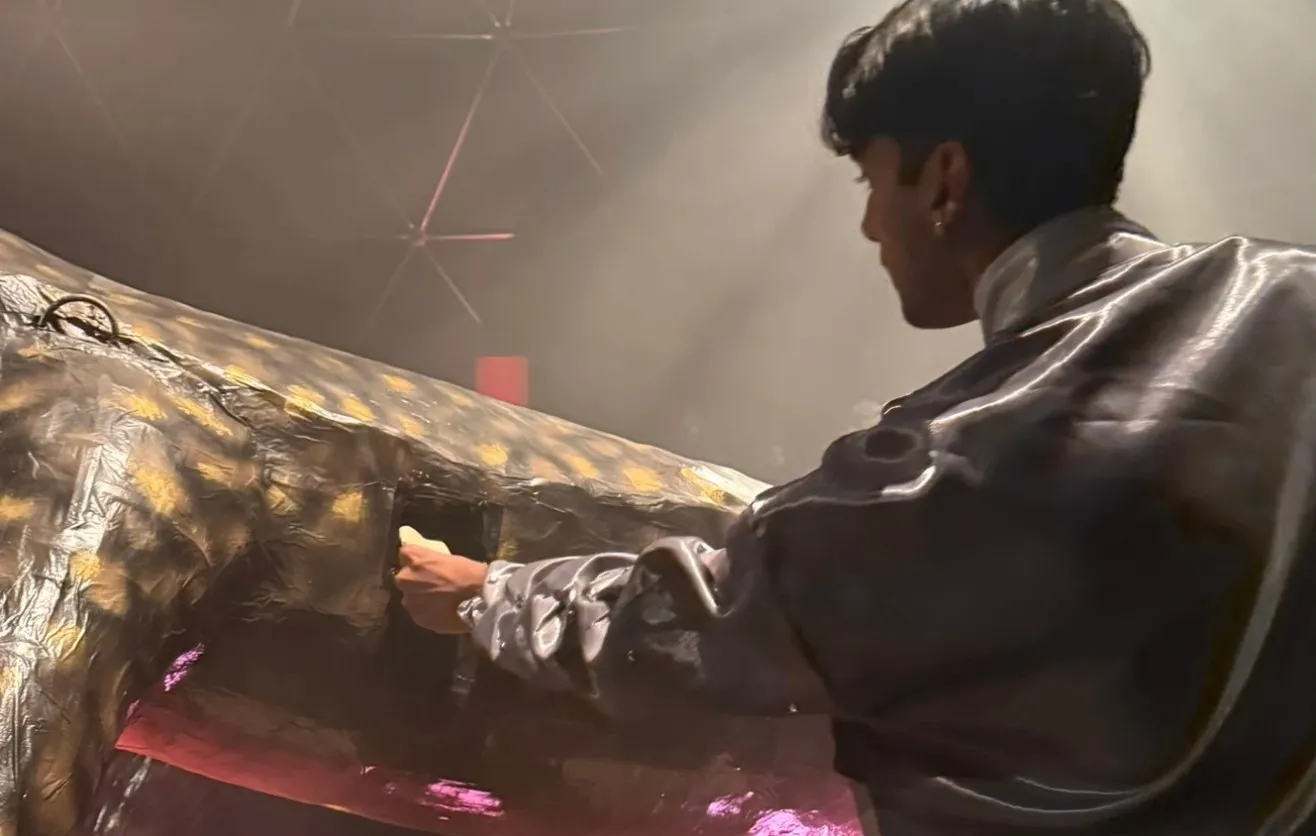
“You write your fear on a piece of paper, you fold it, and you feed it into the creature’s belly.”
That’s it. No one asks what you wrote. No one performs anything at you. The ceremony has been built around you at civic scale, and all it requires from you personally is honesty and a pen. We lined up in the cold and did it - two fears, folded small, posted into the dark with thousands of others. There is something levelling about knowing your private fear is now pressed against a stranger’s. The belly does not sort them.
02 — THE WALK
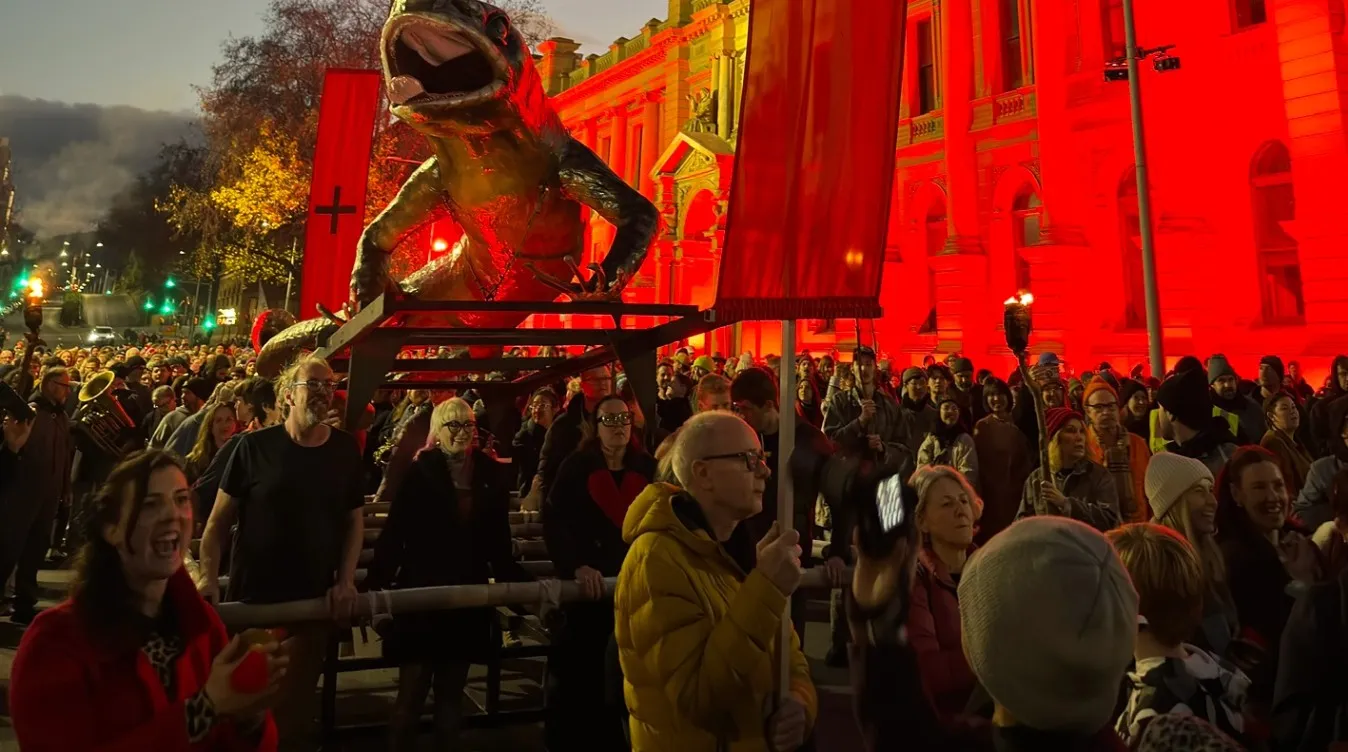
On the last day of the festival, as the sun goes down on a Sunday evening, the city gets ready to walk the skink. Roads close and whole families gather. The skink carried through the streets with the rest of the menagerie, with the crowd chanting ‘Burn the skink, burn the skink’. As we walked towards the burning grounds, every so often the carriers would stop and spin a figure in a full circle, a little flourish of joy, and the crowd around it would lift.
My friend said it best, walking beside me: every time she’d been part of something this size, it was a protest. Marching against. This was a whole city marching towards releasing its fears instead of grievance. It was powerful.
On the footpath, three protesters held signs. ‘Jesus loves all’. ‘Depression is not going to last forever’. Three people facing a sea of thousands who had come to burn their depression rather than pray it away.
We had our own split verdict afterward: I laughed them off but gave them credit for standing there outnumbered a thousand to one; my friend read it differently, as people pushing their religious opinions on you, like the protesters outside an abortion clinic telling you what to do with your life. Both true, maybe. Either way the math stays with me: three against a city and the city didn’t even slow down.
03 — THE WORK
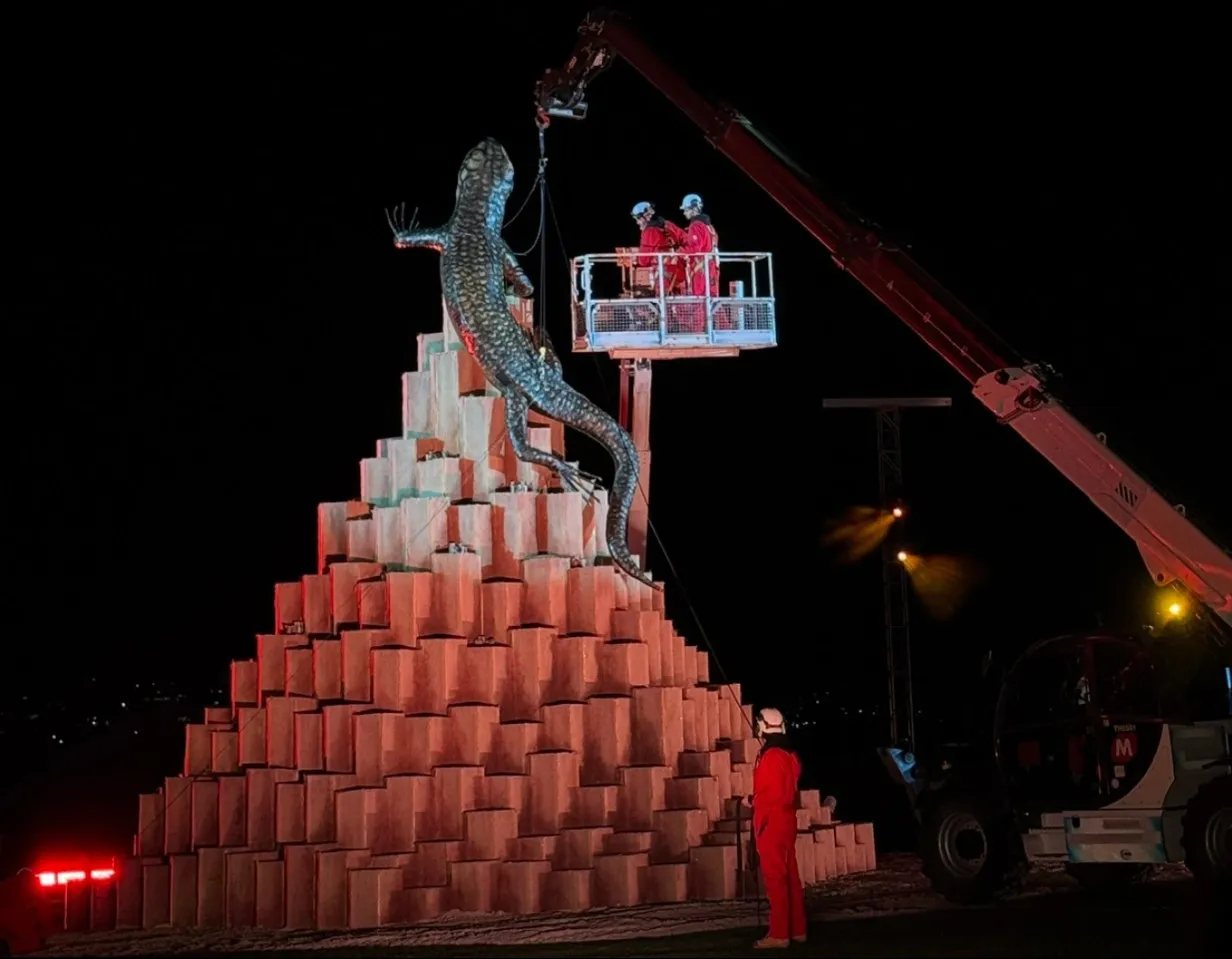
At the ground, the pyre waits - and then, for twenty minutes, the least ceremonial thing imaginable: a crane lifts the skink, swings it, settles it onto the wood while workers in hi-vis climb up and down making it safe. A low wash of ceremonial music. No misdirection. A city standing in the cold watching its neighbours do a difficult job carefully.
We discussed this too - she wanted the machinery staged around, the spell kept whole. But standing there I loved it and the reason I loved it belongs in this piece and not any other: because it was Human. Somebody’s dad operating that crane. Somebody’s shift ending after the burn.
“The sacred here is not delivered from above. It is assembled, in front of you, by the same community that will stand back and watch it burn.”
A ritual is not diminished by watching your own city physically build it for you. The fears in that creature’s belly were carried there by hand and they were lifted onto the fire by hand too, more or less.
04 — THE BURN
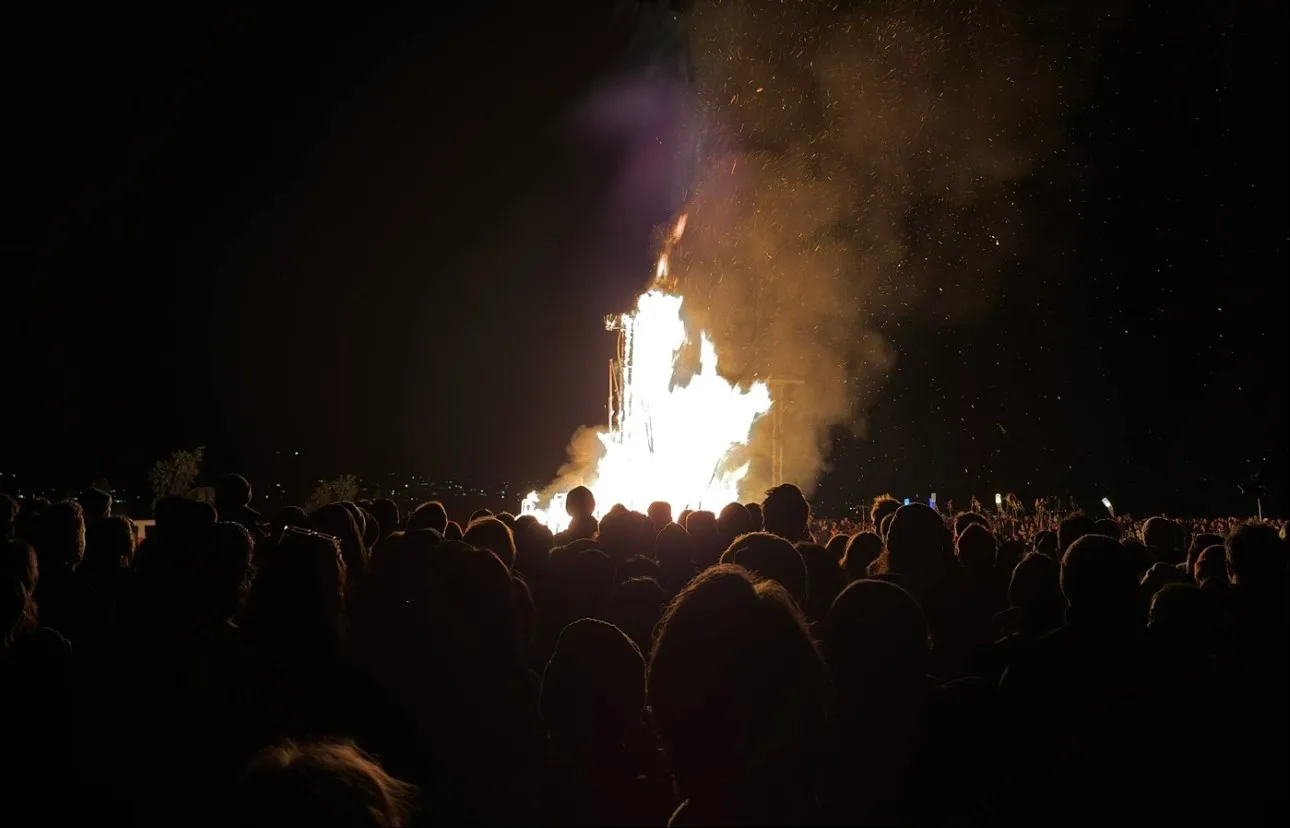
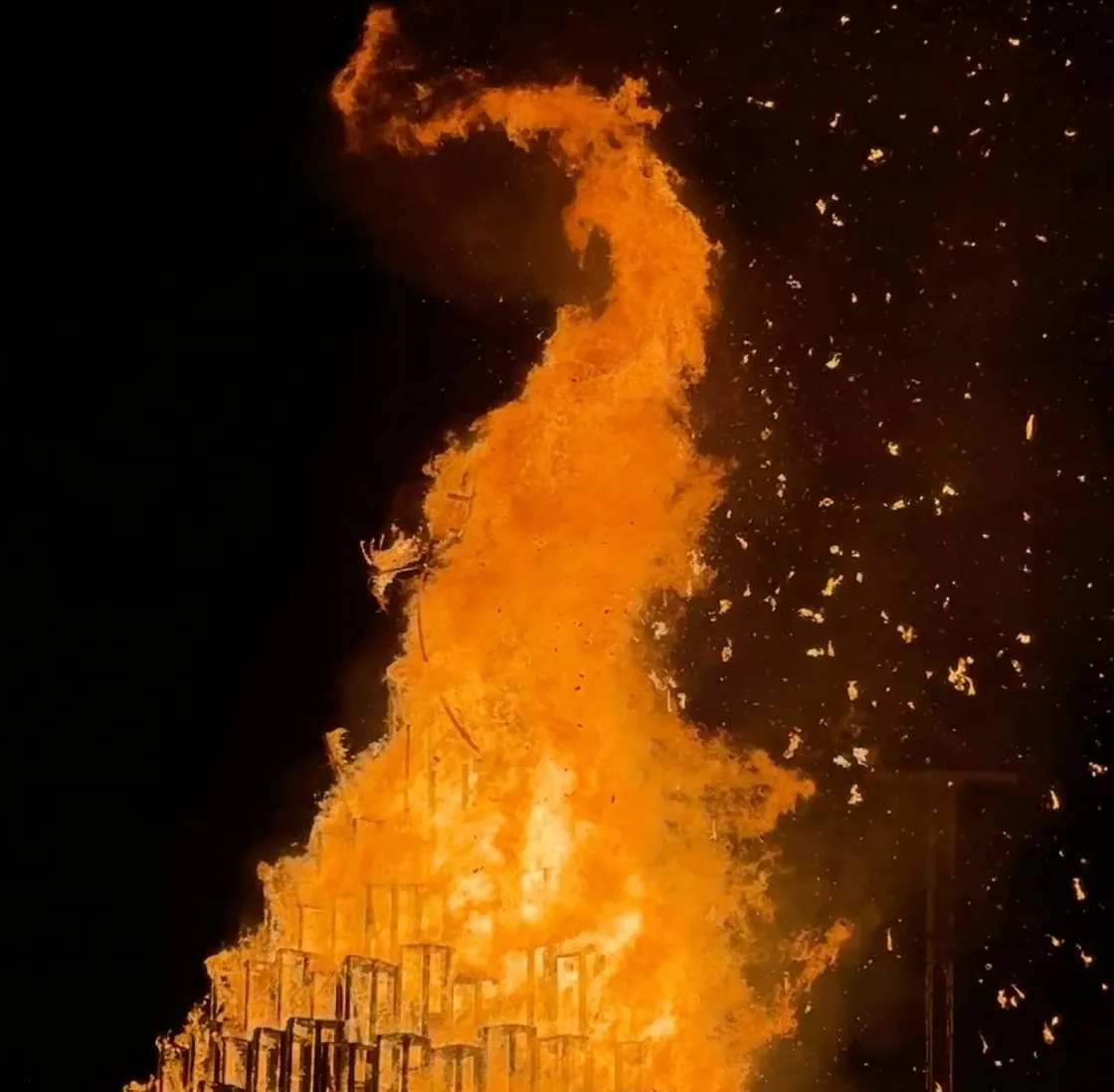
Then it goes up. At one point the flames run blue and a sound moves through the crowd that isn’t quite a cheer - lower than that, relief, given a voice. And you can see them: the papers. The individual folded papers, catching, lifting, glowing, gone. Somewhere in that updraft, mine. Somewhere, hers. Somewhere, the fears of the people who built the creature, and probably - who knows - the fears of three protesters, carried up with everyone else’s whether they posted them or not.
We came as tourists. We left as participants, which is a different citizenship entirely. No event all weekend moved either of us like this and it’s worth being precise about why:
“Everything else at the festival was made for us. This was the one thing the city made with us.”
05 — THE CONFESSION
Full disclosure: the uncle gave me two recommendations, and I only honoured one.
The second was the Nude Swim: the solstice morning ritual where the city that walked its fears to the fire runs, bare and screaming with joy, into freezing water. Same congregation, opposite element.
We had spent at least ninety minutes queuing online to get our hands on tickets for the swim. I had even trained for it, which is the embarrassing part. Weeks of cold plunges in Sydney, preparing my body for a ritual I then didn’t attend. I could tell you why - the 7am wake-up, the zero-degree cold, the fact that we were up till 4am in a room we’d earned our way into - but the honest answer is that some rituals demand a readiness that no amount of rehearsal manufactures and I wasn’t there yet.
I’m choosing to read it not as a failure but as an unburned paper. The fire got my fears this year. The water holds my rain check. One out of two isn’t a scorecard - it’s a promise and we’ve already promised ourselves we’ll keep coming back. That’s the ritual now.
The uncle on the tarmac knew. The program can tell you what to see. Only a local can tell you where to belong and the best recommendations are the ones that take you two visits to complete.